
About the College
Brief History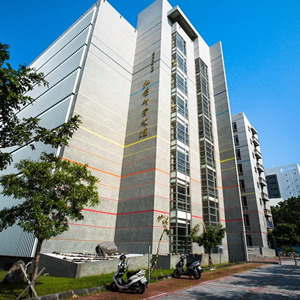
The National Cheng Kung University is the second largest and second oldest university in Taiwan, next only to National Taiwan University. Our university started as an engineering college in 1931. Although an independent College of Arts was established as early as 1969, social science as one of the three major realms of science was not even in the university curriculum until the 1980s. The College of Social Sciences was thus formally established in 1997 for the enhancement of the research and teaching in areas such as politics, economics, law, education, psychology etc.
In order to adapt itself to the increasingly liberal and democratic environment, the university established the Sun Yat-sen Center for Social Sciences Studies in August 1987, mainly through the personal efforts of Prof. Lee Shih-chung. The energetic promotion of social sciences teaching and research bore fruit in September 1993, when the Graduate Institute of Political Economy was established. Prof. Lee then became the Institute's first director.
In May 1996, the Ministry of Education approved the University's application for setting up the Graduate Institute of Education and the Graduate Institute of Legal Sciences, thereby shaping up the skeleton of a new College of Social Sciences. In 1997, the College of Social Sciences formally came into existence.
Given the support of the university's governing body, the college expanded in a fairly rapid manner. Departments of Political Science and Economics were established in 2001. Department of Law was founded in 2002. Graduate Institute of Law in Science and Technology followed two years later. Finally, the first Ph.D. program of the College under the Graduate Institute of Political Economy began to operate in August 2004.
The master programs of both the Graduate Institute of Economics and the Graduate Institute of Cognitive Science as well as the doctoral programs of both the Graduate Institute of Education and the Graduate Institute of Legal Sciences began to operate in 2006. In addition, the Department of Psychology started to operate in 2008. So far, the College has already had 4 departments and 10 institutes and intends to establish more professional graduate institutes such as the institute of Financial & Economic Law, institute of Health Care Economics, and institute of Sociology in the near future. The College intends to promote an integration of different disciplines, enhance international academic exchanges, organize international conferences, and recruit foreign students.
Purpose
The College of Social Sciences expects to become one of the leading academic institutions for social sciences in Taiwan. It is aimed at fulfilling the faculty and students’ global vision and benefit the society at large.
With regard to teaching, various compulsory courses will be set up for students of the College. For research, research projects will be set up to coordinate with different colleges’ scholars and disciplines. With regard to services, the College cooperates with the community and related universities and drives local and global prosperity. The College aims to include major fields in social sciences, to integrate departments, to enrich teaching and research activities, and thereby to equip the students with skills and critical thinking for the development of the nation and the society. By doing so, the College will try to balance the development of human and social sciences and to be the consolidator of natural sciences and engineering in the University. With the University’s prominent tradition, excellent facilities and outstanding alumni, the college will stand uniquely as one of the most important universities in Taiwan.
Teaching Objectives
In a university that has traditionally emphasized natural sciences and engineering, the College of Social Sciences carries the historical mission of rectifying the long-standing imbalance in the University's academic program, at both graduate and undergraduate levels. This College seeks, therefore, not only to train a new generation of social scientists, but more importantly, to add a social science dimension and perspective to the curriculum of the overwhelming majority of undergraduate students who are firmly grounded in natural sciences. The College not only provides comprehensive courses in social sciences for the students, but also offers foundation courses for students to broaden their perspectives on national and world affairs as well as to enhance their analytical skills. And this is to be accomplished primarily through offering general education courses and organizing various scholarly activities. The entire teaching program is designed to promote the students' general understanding of, and interest in, social sciences, with a view not only to broaden their intellectual horizons, but also to inculcate among them an avid interest in, and a serious concern about, the nation's social environment. At the same time, this College also intends to participate actively in the various projects of economic development, political reform, and cultural advancement in southern Taiwan, in order to accelerate the process of national development.
The College provides comprehensive programs in social sciences for students. The faculty is eager to keep up with the pace of global development in the field of social sciences. Regarding academic research, the College has an aspiration to be one of the best research organizations by offering comprehensive doctorate and post-doctorate programs and providing interdisciplinary research activities. In addition to the promotion of inter-college, inter-university, and international intellectual exchanges, the College also considers publishing a Social Sciences Monograph Series, as well as the Social Sciences Working Papers, both of which will be open to public assessment.


 +886-6-2757575 ext.56000、56003、56006(Weekday 8:00-17:00)
 +886-6-2080535
 em56000@email.ncku.edu.tw
 Social Sciences Building, Li-Hsing Campus, No.1, University Road, Tainan City 701, Taiwan (R.O.C)